You lock your door at home. Why not your trailer?
Nobody stopped locking their front door because burglars in another city switched to email scams. Yet every night, trailers carrying six figures of freight sit in unsecured lots protected by nothing more than a factory latch and a plastic seal.
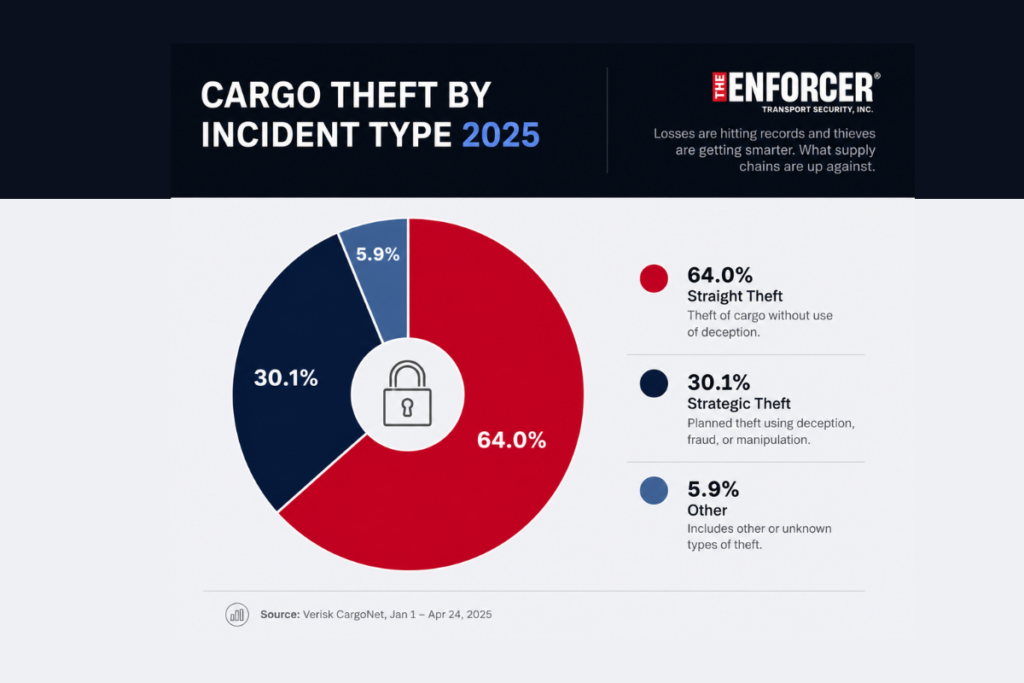
If your security program has shifted its budget, training, and attention entirely toward fraud prevention, the physical layer — the one that stops the majority of thefts — may be exactly where your exposure is growing.
What straight theft actually looks like
- An unattended trailer parked in an unsecured lot over a weekend
- A dropped trailer staged at a customer site with nothing protecting the king pin
- Pilferage at a rest stop—a few pallets gone, not discovered until delivery, hundreds of miles later
- A thief walking a yard at 2 a.m., testing door latches until one gives
Straight theft is a crime of opportunity. The thief isn’t defeating your security—he’s selecting for its absence. He picks the easiest target on the lot, and he moves on the moment a trailer costs him too much time and noise.
This isn’t theory. At one large retailer’s distribution center, a crew hooked onto a trailer and pulled, but the landing gear was locked down and wouldn’t raise. It dragged a few yards, and that was as far as the trailer went. They unhitched, walked down the row, and took a competitor’s trailer with nothing holding its landing gear.
The lock didn’t stop them from trying. It stopped them from leaving with it.
Hardening the target, layer by layer
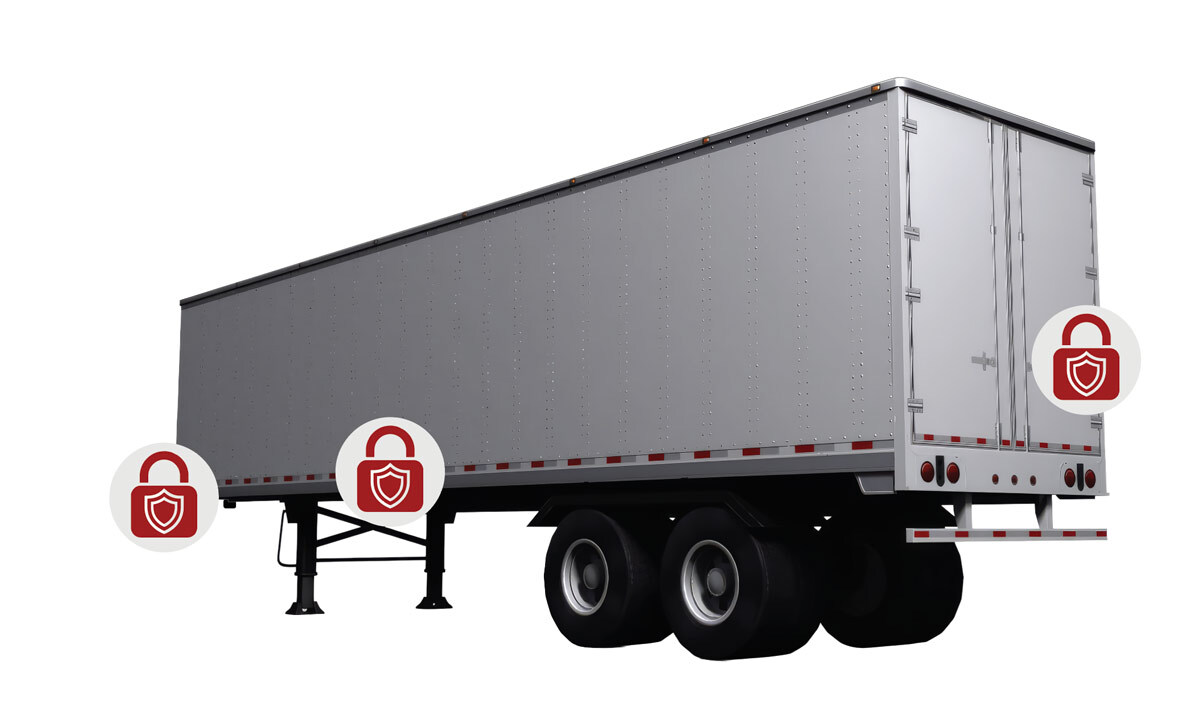
Visible, high-security hardware changes a thief’s math in seconds. That’s the job the ENFORCER® line was built for, matched to each point where a trailer or truck is vulnerable:
-
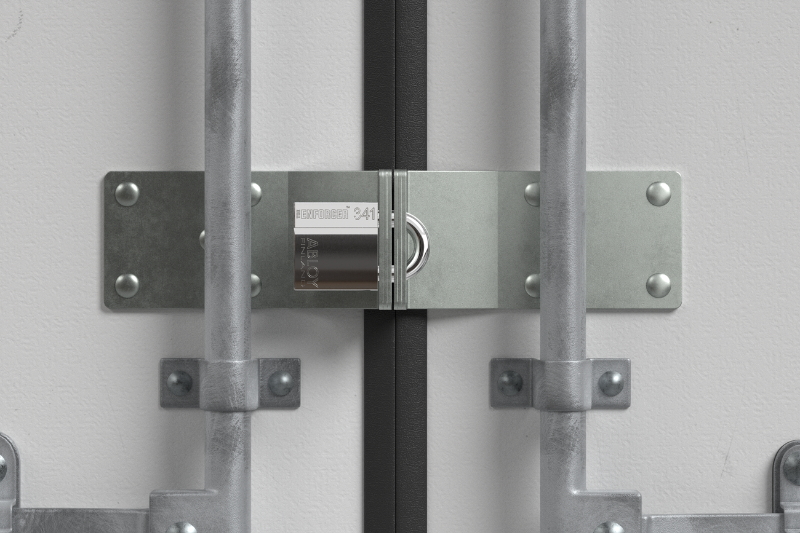
Swing doors: ENFORCER® ABLOY® Padlocks paired with the ENFORCER® Hasp. Springless disc-cylinder technology resists picking, drilling, and corrosion; case-hardened boron steel shackles withstand up to 21,000 lbs. of pulling force.
-
Seal integrity: The Seal Guard™ Lock physically shields the seal and locks the door—one device, two jobs, no more broken-seal claims.
-
High-value or staged loads: The Adjustable Trailer Door Lock, known in the field as “The Beast,” wraps the lock bars themselves and travels with the freight. One major retailer put the Adjustable on its rail containers and cut theft on those loads by about 90%.
-
Dropped trailers: The King Pin Lock and Landing Gear Lock protect an unattended trailer.
-
Tractors: The Air Cuff® Lock prevents unauthorized air-brake release, helping prevent theft of the whole rig.
-
Final mile: The Roll Up Door Lock secures automatically every time the door closes—no driver steps to skip at stop fifteen of twenty.
Because every ENFORCER® lock is built on exclusive ABLOY® cylinders, a fleet can standardize on one keying system—keyed alike, keyed different, or master keyed—and control exactly who holds keys. Restricted keys can’t be duplicated at a hardware store; Transport Security is the only source.
Locks don’t work alone
Hardware is the anchor of a discipline, not a substitute for one. The locks work best inside a simple set of protocols: park in secured, vetted yards. Don’t stop within the first 250 miles of a pickup. Verify locks and seals every time the truck sits.
A protocol tells the driver to secure the load every time the truck sits. The lock is what makes that checkable: you can walk the yard and see it, key it, confirm it. A good intention leaves nothing to inspect. A lock does.
The bottom line
Strategic theft deserves your attention. Straight theft still takes most of the freight — and it’s the one a lock stops. Before the next load leaves the yard, make sure the oldest threat in the industry isn’t the one you’ve stopped defending.
Ready to harden your fleet? Contact a fleet specialist at 952-442-5625 to talk through keying options and fleet pricing.