Why unattended trailers need a separate security plan
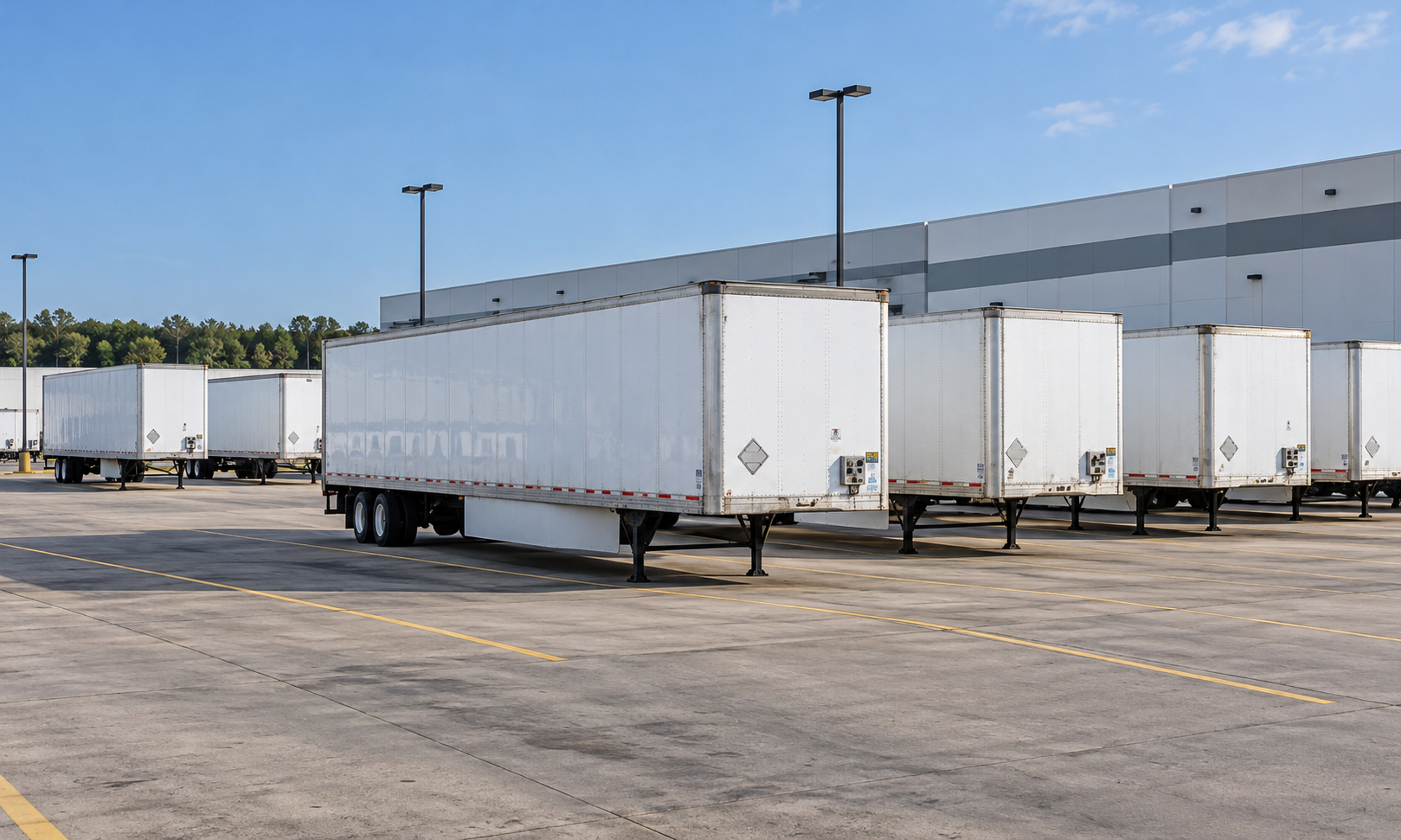
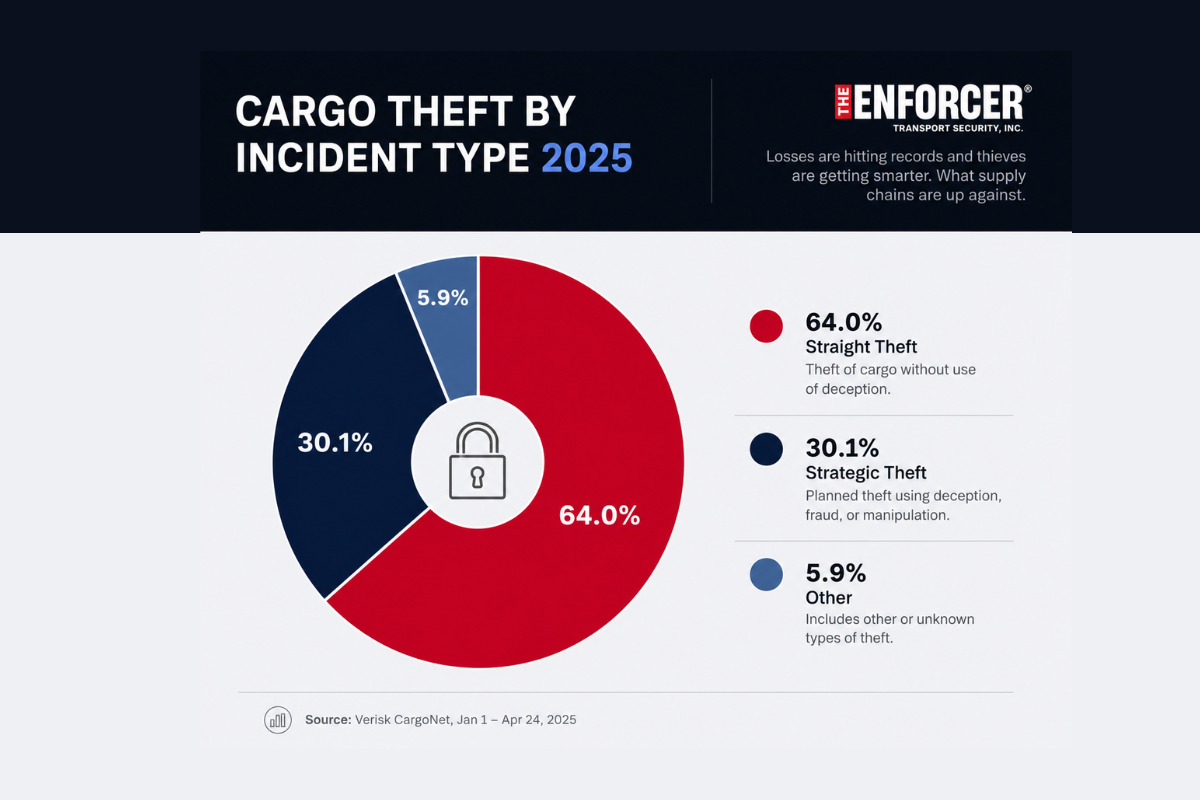
A thief entering a yard is often looking for the easiest target.
They may test door hardware, inspect king pins and look for trailers without visible protection. A factory latch, exposed king pin or unsecured landing gear can quickly identify the trailer requiring the least time and effort.
This risk is not limited to traditional freight yards. Trailers used to store tools, equipment and materials at construction sites can sit unattended overnight or throughout a weekend. Temporary fencing and changing site conditions may also create gaps in security.
Cameras, lighting, fencing and gate controls are important, but they cannot physically prevent a tractor from connecting to a trailer. That requires another layer of protection.
Protect the trailer at multiple points
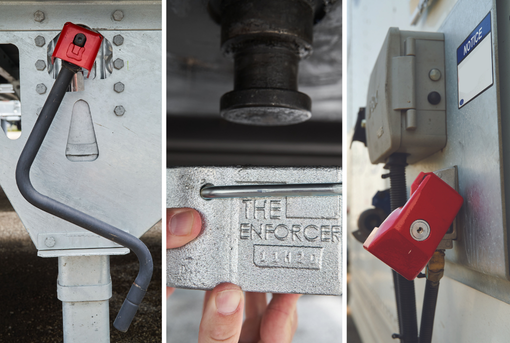
A dropped trailer has several points that can be secured against unauthorized movement. King pin, landing gear and glad hand locks each protect a different part of the equipment. Used individually or together, they add time, difficulty and visible deterrence while the trailer is unattended.
King Pin Lock
The ENFORCER® King Pin Lock 1111 covers the trailer’s king pin so a tractor’s fifth wheel cannot properly engage. Because an exposed king pin leaves the trailer available for a quick hookup, a king pin lock should be a central part of dropped-trailer security.
Landing Gear Lock
The ENFORCER® Landing Gear Lock 1213 secures the landing-gear crank, preventing unauthorized users from raising or lowering the trailer for transport.
Glad Hand Lock
The ENFORCER® Glad Hand Lock 1450 prevents an unauthorized tractor from connecting to the trailer’s air-brake system.
A security director may not need all three locks in every location. The appropriate combination depends on cargo value, site activity, dwell time and the other controls already in place. The objective is to create enough delay and difficulty that the trailer is no longer an easy target.
Protect the cargo, too
Immobilizing the trailer addresses one risk. It does not prevent someone from opening the doors while leaving the trailer in place.
Door protection should be selected for the equipment and operating environment:
- An ENFORCER® High-Security Hasp paired with an ABLOY® padlock provides permanent protection for swing-door trailers.
- An Adjustable Trailer Door Lock offers portable protection that can move between compatible trailers.
- A Roll Up Door Lock secures trailers with roll-up doors.
- A Seal Guard™ Lock helps protect both the cargo seal and the trailer door from tampering.
This is especially important when trailers contain high-value freight, tools, copper, building materials or other products that can be removed quickly and resold easily.
Strengthen the hardware with yard procedures
Physical security works best as part of a consistent yard-management program.
Control trailer positioning
When possible, position loaded trailers with their doors against a wall, barrier or another trailer. This limits the space available to open the doors and remove cargo.
Maintain visibility
Use lighting, cameras and clear sightlines throughout the property. Avoid placing loaded trailers in dark corners or areas obscured by equipment, containers or vegetation.
Verify every pickup
Confirm the driver, tractor and trailer before releasing a load. Maintain an accurate record of which trailers are loaded, where they are staged and who is authorized to move them.
Inspect locks and seals
Check door hardware, locks and seals when a trailer enters the yard, before it leaves and after any unexplained period of access. Record seal numbers and investigate discrepancies before the trailer moves.
Limit unattended dwell time
When possible, avoid leaving high-value loads staged through weekends, holidays or other long periods of limited activity. If extended dwell time is unavoidable, increase the level of physical protection.
Standardize key control
A fleet-wide ABLOY keying system can simplify access for authorized personnel while limiting uncontrolled key duplication. Keyed-alike, keyed-different and master-key configurations allow the system to be structured around the fleet’s facilities, personnel and operating requirements.
Match protection to the location
A secured terminal operating around the clock does not face the same exposure as a remote drop lot visited twice a week. A construction site changes as work progresses, potentially creating new access points or reducing visibility around stored trailers.
Evaluate each location based on:
- Value and type of cargo or equipment
- Length of unattended dwell time
- Site access and perimeter protection
- Lighting and camera coverage
- Frequency of authorized trailer movement
- Local theft activity
- Emergency and incident-response capabilities
The best program is not necessarily one product applied everywhere. It is a consistent security standard that can be adjusted to the actual exposure at each location.
Freight at rest is freight at risk
A camera can help determine what happened after a theft. Physical security helps make the theft harder to carry out in the first place.
For staged and dropped trailers, that means protecting two things: the cargo inside and the trailer itself. Secure the doors, block the steps required to tow the trailer and support the hardware with disciplined yard procedures.
Need help evaluating protection for your yards, drop lots or jobsites? Speak with an ENFORCER fleet-security specialist at 952-442-5625.